the black goddess and the unseen real pdf
Peter Redgrove’s 1987 work delves into myth, psychology, and esoteric practices, exploring the archetype of the Black Goddess and altered states of perception.
This interdisciplinary exploration, available in hardcover, examines uncommon senses and their connection to unseen realities, drawing from diverse traditions.
Overview of Peter Redgrove’s Work
Peter Redgrove was a prolific English poet, novelist, and playwright whose work frequently intersected with occult and psychological themes. His writing often blended mythology, Jungian analysis, and Eastern practices like Taoism and Yoga.
“The Black Goddess and the Unseen Real” exemplifies his approach, a “grab bag” of ideas exploring non-ordinary perception. Redgrove sought to unlock altered states through myth, though some critics found his speculation “muddy;” He aimed to bridge the gap between consciousness and the unseen.
Publication Details and Editions
“The Black Goddess and the Unseen Real” was first published in 1987 by Routledge & Kegan Paul in the United Kingdom. Grove Press released a hardcover edition in June 1988, featuring a dust jacket.
Key ISBNs include 9780802110541 and 0802110541. Copies are available through booksellers like AbeBooks and BookFinder.com, with condition and pricing varying based on wear and edition.
The Core Concept: The Black Goddess
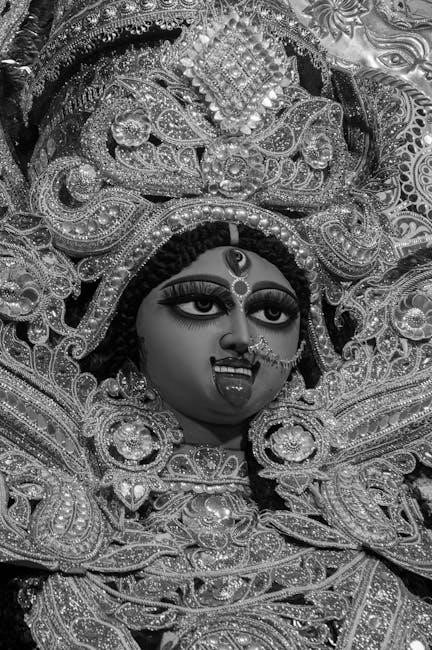
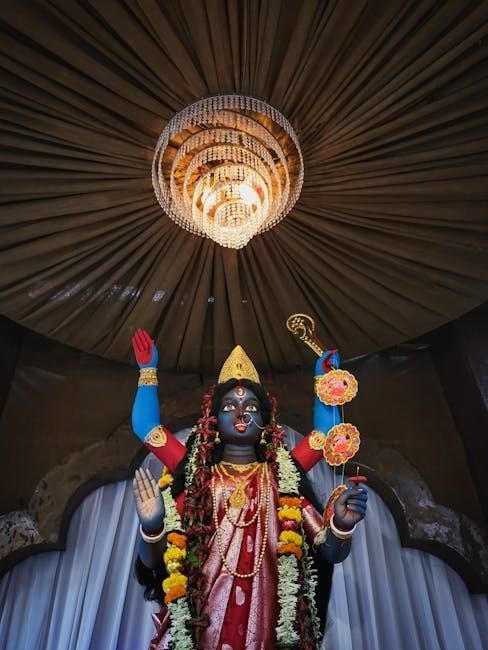
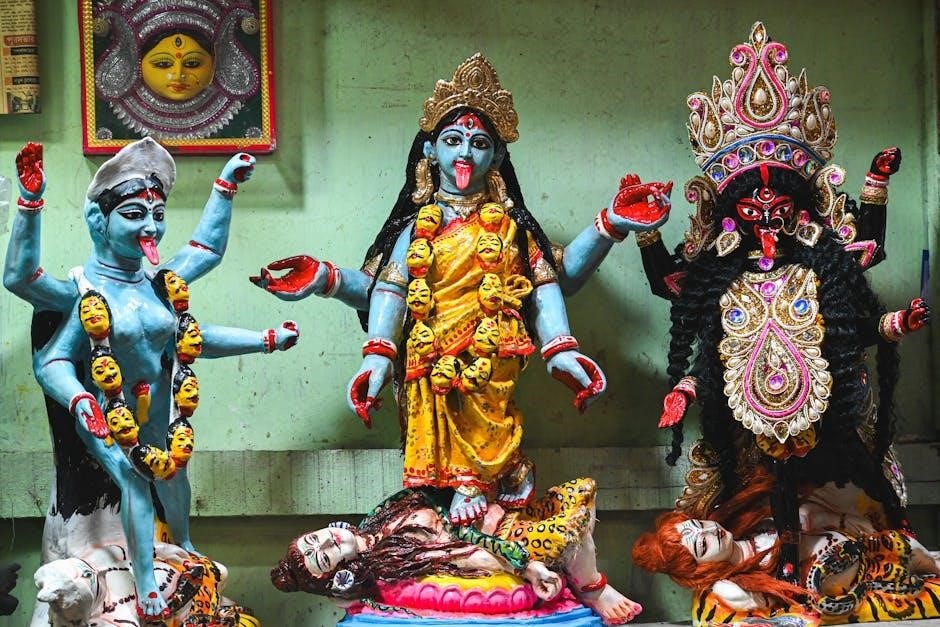
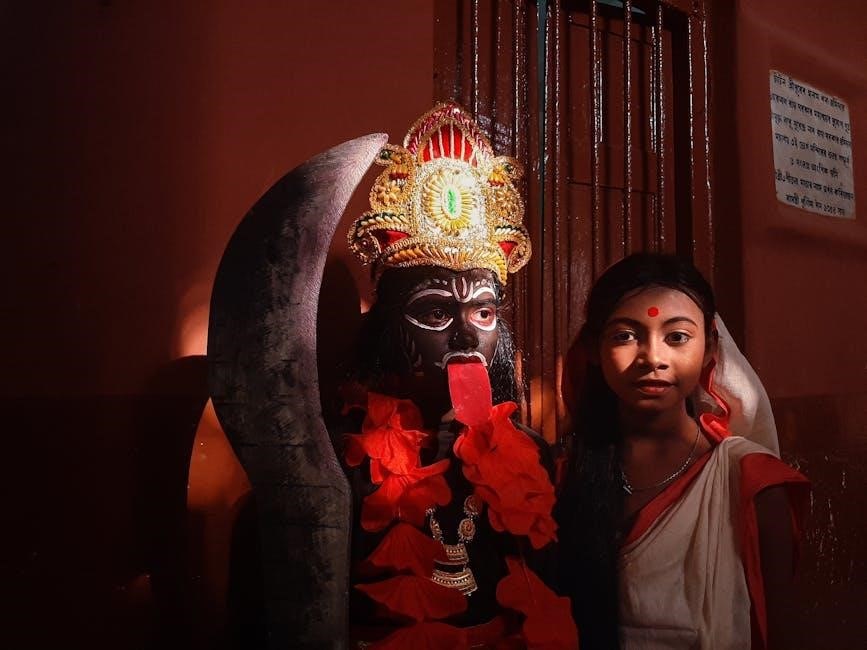
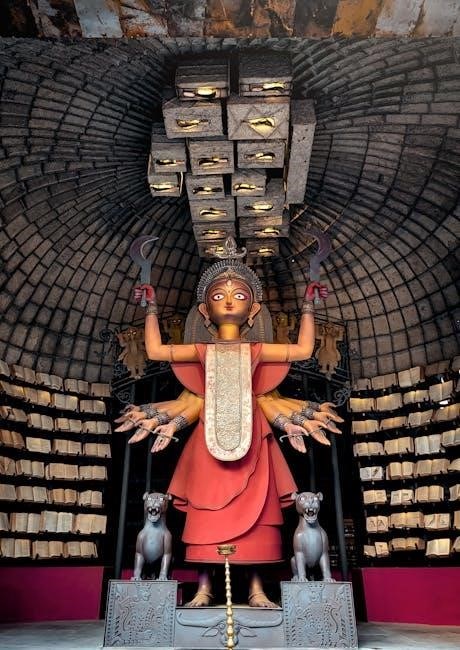
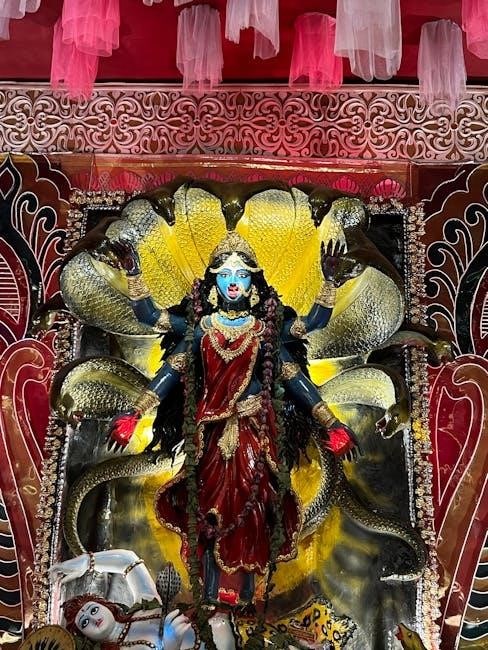
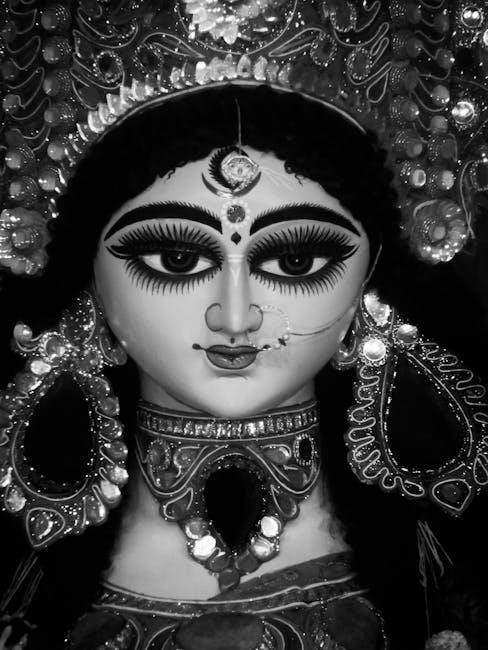
Redgrove’s central idea revolves around the Black Goddess, embodied in figures like Isis and African tribal deity Oduda, representing potent, unseen forces.
Origins and Archetypes of the Black Goddess
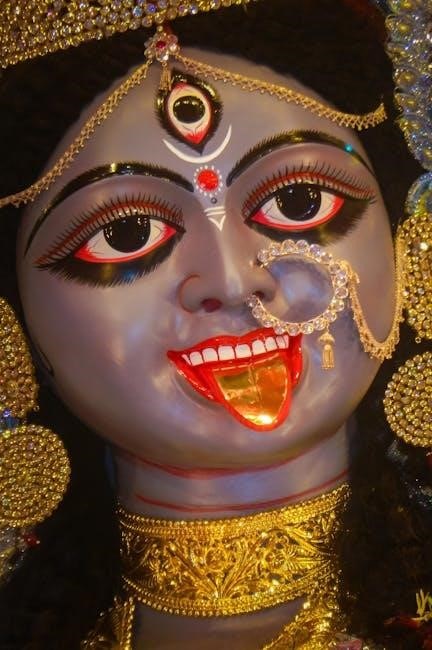
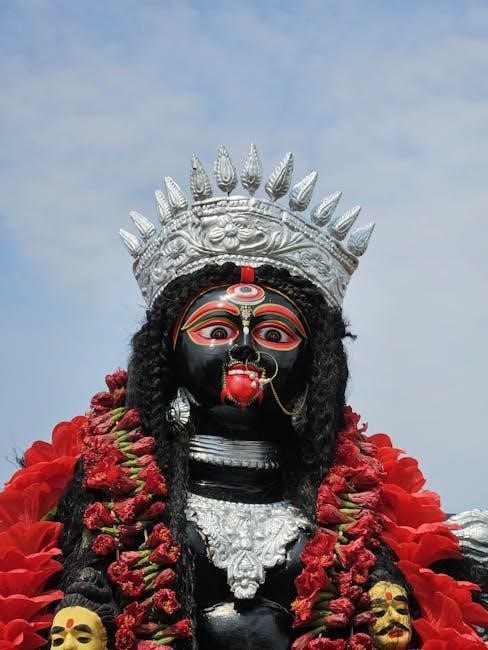
Redgrove investigates the deep roots of the Black Goddess archetype, tracing its presence through various mythologies and spiritual traditions. This figure isn’t merely a deity, but a primal force representing the unconscious, the fertile darkness, and the transformative power of destruction and rebirth.
He posits that she embodies aspects of the feminine principle often suppressed or misunderstood in patriarchal systems, existing beyond conventional perception and societal norms. Her origins are ancient and multifaceted, resonating across cultures.
Isis as a Representation of the Black Goddess
Redgrove specifically identifies Isis as a potent manifestation of the Black Goddess archetype. He views her not simply as a benevolent mother figure, but as a complex deity encompassing both light and shadow, life and death.
Isis’s connection to magic, healing, and the underworld aligns with the Black Goddess’s dominion over hidden realms and transformative processes. This interpretation challenges conventional understandings of Isis, revealing a darker, more primal aspect of her nature.
Oduda and African Tribal Connections
Redgrove links the Black Goddess archetype to Oduda, “the Black One,” within certain African tribal traditions. He suggests a shared, ancient root connecting these seemingly disparate cultural expressions of the divine feminine.
This connection highlights the universality of the archetype, transcending geographical boundaries and cultural contexts. Exploring Oduda provides a non-Western perspective, enriching the understanding of the Black Goddess’s multifaceted nature and primal power.
Unseen Realities and Uncommon Senses
Redgrove investigates non-ordinary perception, linking it to myth and the marvelous, aiming to unlock altered states and explore realities beyond conventional understanding.
Exploring Non-Ordinary States of Perception
Redgrove’s work champions opening “the doors of perception,” venturing beyond typical sensory experience. He suggests accessing these states through myth, ritual, and a deep dive into the unconscious mind.
This pursuit involves challenging conventional reality and embracing the “marvelous,” seeking understanding through altered consciousness. The book implies that these states are crucial for grasping the nature of the Black Goddess and the unseen realms she embodies, offering a pathway to expanded awareness.
The Role of Jungian Psychology
Redgrove heavily incorporates Jungian concepts, particularly archetypes, into his exploration of the Black Goddess. He views her as a powerful, primordial image residing within the collective unconscious.
This psychological framework provides a lens for understanding the Goddess not as an external deity, but as an intrinsic aspect of the human psyche. The book suggests accessing this archetype can unlock deeper self-knowledge and connect individuals to unseen realities.
Taoist Sexual Practices and Their Relevance
Redgrove integrates Taoist sexual practices, viewing them as a potent method for cultivating and channeling vital energy – chi. He posits these techniques, traditionally focused on prolonging intercourse and circulating energy, can induce altered states of consciousness.
These practices are presented as a means to access the “unseen real,” bridging the physical and spiritual realms, and connecting practitioners to the power embodied by the Black Goddess.
Yogic Methods and Gnostic Wisdom
Redgrove blends Yogic techniques with Gnostic insights, suggesting they unlock hidden perceptions and facilitate a deeper understanding of the Black Goddess archetype.
This synthesis aims to awaken dormant senses and access esoteric knowledge, revealing the nature of the unseen realms.
Integration of Yogic Techniques
Redgrove’s approach incorporates Yogic practices not merely as physical exercises, but as pathways to altered consciousness, crucial for perceiving the Unseen Real.
He posits that specific Yogic methods, particularly those focused on energy manipulation and breath control, can unlock dormant sensory abilities, allowing access to realms beyond ordinary perception.
This integration is presented as a means of embodying the power of the Black Goddess and experiencing a direct connection to the archetypal forces she represents, fostering a profound transformation.
Gnostic Influences on Redgrove’s Philosophy
Redgrove’s work demonstrates a clear resonance with Gnostic thought, particularly its emphasis on direct, experiential knowledge of the divine, bypassing conventional religious structures.
The Gnostic concept of a hidden reality, accessible through inner exploration and the awakening of latent consciousness, aligns with his exploration of the Unseen Real and uncommon senses.
This influence manifests in his focus on uncovering hidden truths and challenging established perceptions, mirroring the Gnostic quest for liberation from illusion and the embrace of esoteric wisdom.
Critical Reception and Analysis
Redgrove’s approach receives mixed reviews, praised for its interdisciplinary nature but criticized for speculative tendencies and a sometimes disorganized presentation of complex ideas.
Common Criticisms of Redgrove’s Approach
Critics often point to a lack of rigorous methodology, describing the work as a “grab bag” of ideas, blending Jungian psychology, Taoism, and Gnosticism without sufficient grounding.
The book is sometimes perceived as bogged down in “muddy speculation,” lacking clarity and concrete evidence to support its assertions about the Black Goddess and uncommon senses.
Some find the connections drawn between diverse traditions to be tenuous and overly reliant on subjective interpretation.
Strengths of the Book’s Interdisciplinary Nature
Despite criticisms, the book’s strength lies in its ambitious synthesis of diverse fields – mythology, psychology, and esoteric traditions.
This broad approach offers a unique perspective on altered states of consciousness and the exploration of the unconscious.
Redgrove’s weaving together of Jungian concepts, Taoist practices, and Gnostic wisdom provides a rich, if unconventional, framework for understanding the “unseen real.”
The Book’s Structure and Content
Redgrove’s work explores themes of the Black Goddess, uncommon senses, and altered perception, organized into chapters that blend myth, psychology, and esoteric wisdom.
Key Themes and Arguments
Central to Redgrove’s exploration is the concept of the Black Goddess, embodied in figures like Isis and African tribal deities, representing a potent, often overlooked feminine power.
He argues for the existence of “uncommon senses” – ways of perceiving reality beyond ordinary consciousness – and their connection to a deeper, “unseen real.”
Redgrove integrates Jungian psychology, Taoist sexual practices, and yogic techniques to demonstrate methods for accessing these altered states and unlocking hidden potential within the human psyche.
Organization of Chapters and Ideas
The book’s structure reflects its interdisciplinary nature, moving between mythological analysis, psychological theory, and practical techniques for altered perception.
Redgrove builds his argument by first establishing the archetype of the Black Goddess, then exploring the mechanisms of non-ordinary consciousness.
Subsequent chapters detail specific methods – yogic, Taoist, and Gnostic – for cultivating “uncommon sense” and accessing the “unseen real,” creating a holistic and interconnected framework.
Physical Characteristics of the Book
“The Black Goddess and the Unseen Real” was initially published as a hardcover edition with a dust jacket, featuring photos and white lettering.
Copies are generally described as clean and tightly bound, though exterior wear may be present.
Hardcover Editions and Dust Jackets
The primary physical format for “The Black Goddess and the Unseen Real” is a hardcover edition, originally released by Grove Press in June 1988. Descriptions frequently mention the inclusion of a dust jacket, though its condition varies with age and handling.
AbeBooks and BookFinder.com listings often detail the jacket’s state, noting potential wear. The book itself is typically described as clean, unmarked, and tightly bound, suggesting a relatively durable construction despite its age.
ISBN Information (9780802110541 & 0802110541)
“The Black Goddess and the Unseen Real” is readily identifiable by its ISBNs: 9780802110541 (the 13-digit version) and 0802110541 (the 10-digit version). These numbers are crucial for locating specific editions when searching online booksellers like AbeBooks and BookFinder.com.
Using these ISBNs ensures you find the correct book, aiding in accurate identification and purchase, particularly when navigating the used book market where multiple editions may exist.
Peter Redgrove: Biographical Context
Peter Redgrove was a prolific English poet, novelist, and playwright whose diverse background profoundly influenced his exploration of myth and the unconscious.
His artistic pursuits shaped his unique perspective, evident in works like “The Black Goddess and the Unseen Real.”
Redgrove’s Background as a Poet and Playwright
Redgrove’s early career centered on poetry and playwriting, fostering a deeply symbolic and imaginative approach to language and narrative. This foundation heavily influenced his later esoteric explorations.
His poetic sensibility permeates “The Black Goddess and the Unseen Real,” lending a lyrical quality to complex psychological and mythological concepts. He skillfully blended artistic expression with scholarly investigation, creating a unique and compelling voice within esoteric literature.
This background allowed him to approach ancient archetypes with both creativity and intellectual rigor.
Influence of Redgrove’s Life on His Writing
Redgrove’s personal experiences and intellectual pursuits profoundly shaped his work, particularly “The Black Goddess and the Unseen Real.” His exploration of Jungian psychology, Taoism, and yogic practices stemmed from a deep personal quest for understanding consciousness.
This quest fueled his investigation into altered states and the power of myth, resulting in a uniquely integrated philosophical system. His life’s journey is interwoven within the book’s complex tapestry of ideas.
The “Uncommon Sense” Aspect
Redgrove posits “uncommon sense” as a key to perceiving the unseen real, bridging intuitive understanding with rational thought, and accessing deeper realities.
Defining and Understanding Uncommon Sense
Uncommon sense, within Redgrove’s framework, isn’t simply irrationality, but a heightened awareness beyond conventional perception. It’s a faculty allowing access to the “unseen real” through myth, intuition, and altered states.
This involves recognizing patterns and connections often missed by logical analysis, embracing the marvelous, and acknowledging the validity of non-ordinary experiences. It’s a reclaiming of primal knowing, a direct link to archetypal forces.
Connecting Uncommon Sense to the Unseen Real
Redgrove posits that uncommon sense acts as a key, unlocking access to the “unseen real” – a realm beyond everyday consciousness. This connection is forged through exploring the Black Goddess archetype and engaging with practices like Taoist sexual techniques and yogic methods.
By cultivating this intuitive faculty, one can bypass rational limitations and directly experience the underlying forces shaping reality, bridging the gap between myth and lived experience.
Legacy and Influence
Redgrove’s work impacted subsequent occult and psychological studies, offering a unique synthesis of ideas that continues to resonate with researchers today.
His interdisciplinary approach remains relevant, inspiring exploration into consciousness and the archetypal realm.
Impact on Subsequent Occult and Psychological Studies
Redgrove’s synthesis of Jungian psychology, Taoist practices, and Gnostic wisdom profoundly influenced later explorations within occultism and depth psychology.
The book’s focus on non-ordinary states of perception and the Black Goddess archetype spurred further research into altered consciousness and feminine divine figures.
Scholars and practitioners alike have built upon his framework, examining the intersection of myth, symbolism, and the unconscious mind, solidifying its lasting impact.
Continuing Relevance of Redgrove’s Ideas
Redgrove’s work maintains relevance due to its holistic approach to understanding consciousness and the unseen realms, resonating with contemporary interests in esoteric studies.
His exploration of “uncommon sense” and the Black Goddess offers a unique perspective on psychological and spiritual development, appealing to a broad audience.
The book’s interdisciplinary nature continues to inspire new interpretations and applications within modern occult and psychological thought, ensuring its enduring legacy.
Availability and Acquisition
Copies of “The Black Goddess and the Unseen Real” can be found through online booksellers like AbeBooks and BookFinder.com, varying in condition and price.
Finding Copies of the Book (AbeBooks, BookFinder.com)
Locating “The Black Goddess and the Unseen Real” requires searching online marketplaces. AbeBooks frequently lists both new and used copies, offering a range of editions and prices. BookFinder.com serves as a valuable comparison tool, aggregating listings from numerous booksellers to help you find the best deal.
Be aware that availability fluctuates, and prices depend on the book’s condition (including the dust jacket) and edition. Searching both platforms increases your chances of securing a copy of this intriguing esoteric work.
Condition and Pricing Considerations
Pricing for “The Black Goddess and the Unseen Real” varies significantly based on condition. Hardcover editions with dust jackets command higher prices than those without. Expect to pay more for copies described as “Very Good” or “Like New,” while “Good” or “Acceptable” copies will be more affordable.
Factor in shipping costs when comparing prices across AbeBooks and BookFinder.com. Condition reports are crucial; carefully review descriptions and photos before purchasing to ensure satisfaction.
Further Research and Related Works
Exploring similar themes, investigate Jungian psychology, Taoist practices, and goddess archetypes in authors like Marion Woodman and Joseph Campbell for deeper understanding.
Exploring Similar Themes in Other Authors
Delving into related scholarship reveals resonances with authors exploring archetypal psychology and the divine feminine. Marion Woodman’s work on the feminine psyche and shadow aspects aligns with Redgrove’s focus on the Black Goddess.
Furthermore, Joseph Campbell’s comparative mythology illuminates universal patterns in goddess worship. Exploring the writings of Mircea Eliade offers insights into shamanism and altered states, mirroring Redgrove’s interest in uncommon senses and unseen realities. These authors provide complementary perspectives.
Resources for Studying Redgrove’s Philosophy
Scholarly articles analyzing Redgrove’s interdisciplinary approach are limited, necessitating exploration of source materials he utilized. Jungian texts on archetypes and the collective unconscious are crucial.
Investigating Taoist and Yogic traditions provides context for his practices. Online databases like JSTOR and academic search engines can yield relevant research. AbeBooks and BookFinder.com assist in locating copies of his works and related esoteric literature for deeper study.
The Book’s Place in Esoteric Literature
Redgrove’s work uniquely blends goddess archetypes with Jungian psychology and Eastern practices, contributing a distinctive voice to Western esoteric thought and study.
Comparison to Other Works on Goddess Archetypes
Compared to more traditional studies of goddess archetypes, The Black Goddess and the Unseen Real distinguishes itself through its expansive scope, integrating Jungian analysis, Taoist sexual practices, and yogic techniques.
Unlike focused explorations of specific goddesses, Redgrove’s work centers on a darker, less conventional aspect of the divine feminine, linking it to altered states and uncommon perception.
It diverges from purely mythological approaches by grounding the archetype in psychological and experiential realities, offering a unique perspective within esoteric literature.
Contribution to the Field of Western Esotericism
Redgrove’s work significantly contributes to Western Esotericism by bridging psychological, mythological, and practical esoteric traditions, offering a novel exploration of consciousness and the divine feminine.
It expands the understanding of goddess archetypes beyond conventional interpretations, introducing the “Black Goddess” as a potent force for transformation and accessing unseen realities.
The book’s interdisciplinary approach encourages a holistic view of esoteric knowledge, influencing subsequent studies in occultism and psychological exploration.
Understanding the Title
“The Black Goddess” represents a primal, transformative feminine force, while “The Unseen Real” signifies hidden dimensions accessible through altered perception.
The title encapsulates Redgrove’s exploration of myth, psychology, and uncommon senses.
Deconstructing “The Black Goddess”
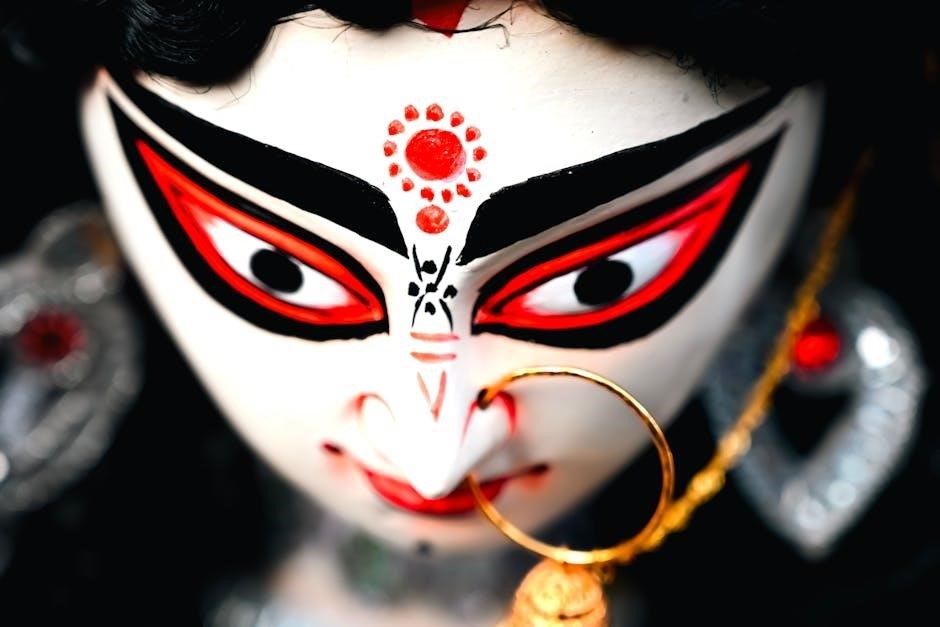
Redgrove’s concept of the Black Goddess isn’t a deity of evil, but a powerful, primordial force embodying the unconscious and the shadow self.
She represents the destructive and creative aspects of the feminine, linked to Isis and African tribal figures like Oduda, the Black One. This archetype challenges conventional goddess imagery, delving into the darker, more mysterious facets of the divine feminine, and the hidden realms of the psyche.
Interpreting “The Unseen Real”
“The Unseen Real” refers to realities beyond ordinary perception, accessible through altered states and “uncommon senses.” Redgrove suggests these senses, often dismissed, are vital for understanding deeper truths.
He connects this realm to Jungian psychology, Taoist practices, and Gnostic wisdom, proposing that myth and the marvelous can unlock these doors, though his approach is sometimes considered speculative.